web analytics

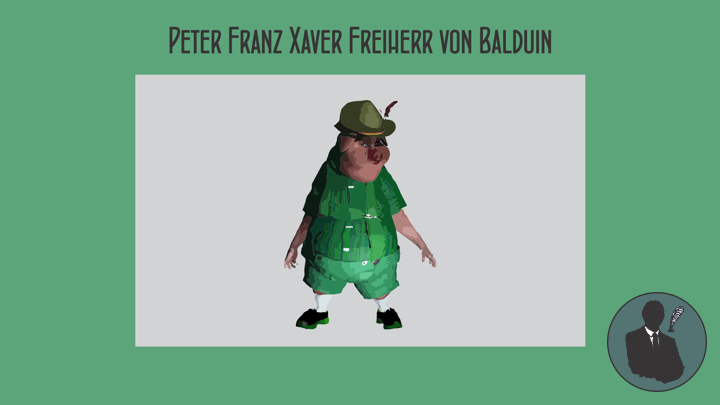
Peter Franz Xaver Freiherr von Balduin

——

#LudgerBedardConsultingPrivateDetective #LudgerBedard #JamesKurtnay #Distillery #Laboratory #Alchemy #Detective #Adventurer #Occult #Paranormal #Magic #Alchemy #3DAnimation

——
Balduin

——

Peter Franz Xaver Freiherr von Balduin

Scientific research has proven that all things in the universe, including us, are composed of electrical, and magnetic energy alongside many other forms of energy such as gravity, and radio waves. Additionally, research has delved into understanding consciousness and has shown that there is more beyond our usual awareness – beyond what we can see with our eyes.

We are living energy fields. Our physical bodies are composed of energy producing particles, each of which is in constant motion or are vibrating. For example, our heartbeat, breathing rates, and circadian rhythms are examples of physiological energy we can feel and measure.

There are a multitude of levels of consciousness and awareness which vibrate, but there are three main levels. Ludger and James in state of contracted awareness. We are controlled by our ego conditioning and believe that the conditioned thoughts, emotions, behaviors, and patterns are what we are and that the outside world is the only true reality. We feel small, isolated and separated from the world. In this state of expanded awareness level, what appeared to be threatening or a barrier are actually opportunities. We understand that everything that seems like an obstacle has a clear purpose as lessons. We can see the beauty in most things and the blessings in life. There are state of pure awareness, there is just what is and we accept what is. We feel the wholeness and unity within creation. One knows that all is the flow of the spiritual energy and creative force and consciousness filled with an abundance of all possibilities.

Ludger and James and practitioners of various esoteric forms of spirituality refer to a variety of experiences and phenomena as being due to “Energy” or “Force” that measurement from the scientific form of energy. Ludger and James has created numerous clones of themselves, intended to succeed him successively, in the event of violent death, through a conservation and regeneration device called the duplicator machine.

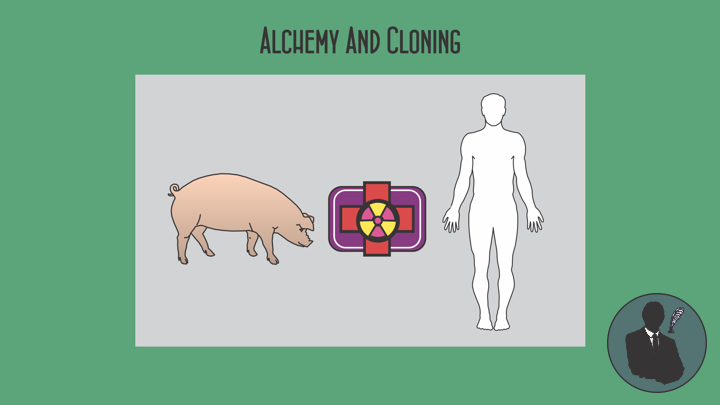
Human and pig cloning. The artificial cloning of organisms, sometimes known as reproductive cloning, is often accomplished via somatic-cell nuclear transfer human and pig, a cloning method in which a viable embryo is created from a somatic cell and an egg cell. The process is applied to fertilized human and pig eggs in vitro, causing them to split into identical genetic copies of the original. The artificial creation of humans and pig by a method of growing cells from a tissue or DNA sample, the replication may be instantaneous.

Balduin

Clone: 1664 (Clonal Colony Duplicator Machine: 50 years)

  • Physician (No)
  • Mathematics (No)
  • Astronomy (No)
  • Physicist (No)
  • Chemistry (No)
  • Engineering (No)
  • Electronic (No)
  • Magic (No/Yes)
  • Sidekick
  • Funny language effects
  • Etc…
  •   

Ludger Bedard and James Kurtnay

Alchemy And Cloning

——

#LudgerBedardConsultingPrivateDetective #LudgerBedard #JamesKurtnay #Distillery #Laboratory #Alchemy #Detective #Adventurer #Occult #Paranormal #Magic #Alchemy #3DAnimation

——

Alchemy And Cloning

——

Ludger and James and quest alchemy provided a body of knowledge that ultimately led to the sciences of chemistry, metallurgy, and pharmacology. The unknown substance, also called “Tincture” or “Powder” sought by alchemists for its supposed ability to transform base metals into precious ones, especially gold and silver. Alchemists also believed that an “Elixir Of Life” could be derived from it. Inasmuch as alchemy was concerned with the perfection of the human soul, the “Philosopher’s Stone” was thought to cure illnesses, prolong life, and bring about spiritual revitalization.

Long shrouded in secrecy, alchemy is now recognized as the ancestor of modern chemistry. Alchemists were notorious for attempting to make synthetic gold, but their goals were far more ambitious: to transform and bend nature to the will of an industrious human imagination. For scientists, philosophers, and artists alike, alchemy seemed to hold the key to unlocking the secrets of creation. Alchemists’ efforts to discover the way the world is made have had an enduring impact on artistic practice and expression around the globe. Inventions born from alchemical laboratories include metal alloys for sculpture and ornament, oil paints, effects in glassmaking, and even the chemical baths of photography. The mysterious art of alchemy transformed visual culture from antiquity to the Industrial Age, and its legacy still permeates the world we make today.

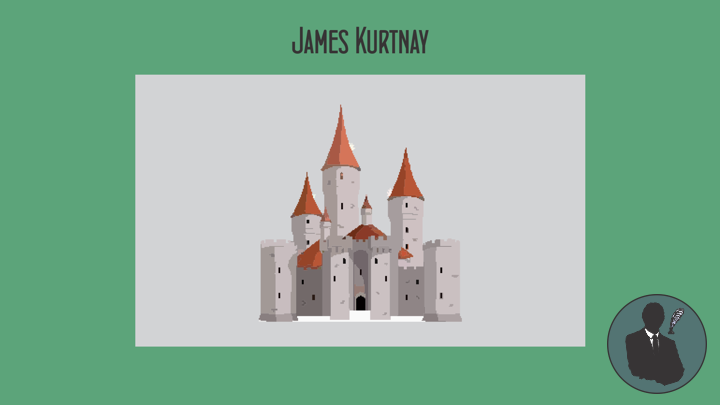
Kurtnay Castle (Argyll, Scotland) and St James’s Palace (London, United Kingdom) is the alchemical laboratories. Molecular cloning is a set of experimental methods in molecular biology that are used to assemble recombinant DNA molecules and to direct their replication within host organisms. The use of the word cloning refers to the fact that the method involves the replication of one molecule to produce a population of cells with identical DNA molecules. Molecular cloning generally uses DNA sequences from two different organisms: the species that is the source of the DNA to be cloned, and the species that will serve as the living host for replication of the recombinant DNA. Molecular cloning methods are central to many contemporary areas of modern biology and medicine.

Cloning is the process of producing individual organisms with identical genomes, either by natural or artificial means. In nature, some organisms produce clones through asexual reproduction, this reproduction of an organism by itself without a mate is known as parthenogenesis. In the field of biotechnology, cloning is the process of creating cloned organisms of cells and of DNA fragments.

The artificial cloning of organisms, sometimes known as reproductive cloning, is often accomplished via somatic-cell nuclear transfer, a cloning method in which a viable embryo is created from a somatic cell and an egg cell. Another example of artificial cloning is molecular cloning, a technique in molecular biology in which a single living cell is used to clone a large population of cells that contain identical DNA molecules.

Ludger and James travel in Vienna, Austria, in human and pig cloning the 1664.

Ludger Bedard and James Kurtnay

James Kurtnay

——

#LudgerBedardConsultingPrivateDetective #LudgerBedard #JamesKurtnay #Distillery #Laboratory #Alchemy #Detective #Adventurer #Occult #Paranormal #Magic #Alchemy #3DAnimation

——

James Kurtnay

——

James Kurtnay

The area around Port Ellen has a variety of archaeological sites covering the Neolithic, Bronze and Iron Age periods. There are standing stones at Kilbride, a fort at Borraichill Mor, several chambered cairns, and a chapel at Cill Tobar Lasrach.

Lord of the Isles is a title of Scottish nobility with historical roots that go back beyond the Kingdom of Scotland. It began with Somerled in the 12th century and thereafter the title was held by a series of his descendants, the Norse-Gaelic rulers of the Isle of Man and Argyll and the islands of Scotland in the Middle Ages. They wielded sea-power with fleets of galleys. Although they were, at times, nominal vassals of the kings of Norway, Ireland, or Scotland, the island chiefs remained functionally independent for many centuries. Their territory included much of Argyll, the Isles of Arran, Bute, Islay, the Isle of Man, Hebrides, Knoydart, Ardnamurchan, and the Kintyre peninsula. At their height they were the greatest landowners and most powerful lords after the kings of England and Scotland.

In their maritime domain the Lords of the Isles used galleys for both warfare and transport. Though they undoubtedly acquired longships from the Norse they defeated, the ships of the Dalriadic Scots and Irish and Islesmen predate the Viking longships and knarrs, clinker-built, though each had a square sail and rows of oars. In the mid 12th century, Somerled, the first Lord of the Isles, developed the stern rudder that gave the galleys and longships sailed by the Islesmen greater maneuverability over the steering oar used by the Vikings. These ships took part in sea battles and attacked castles or hill forts almost always located close to the sea. The Lordship specified the feudal dues of its subjects in terms of numbers and sizes of the galleys each area had to provide in service to their Lord.

Father in Robert Kurtnay, 2th Lord Kurtnay (1517-1571). Kurtnay Castle, is located on the south side of Islay, in Argyll, Scotland, on the shore of Lagavulin Bay, from Port Ellen. The castle was once a naval base of the Lord of the Isles, chiefs of Clan Kurtnay. James Kurtnay, 3th-16th Baron Kurtnay (1561-***).

Islay single malts are the single malt Scotch whiskies made on Islay, one of the southernmost of the Inner Hebridean Islands located off the west coast of Scotland. Some sources indicate that Irish monks may have been the first to distill whisky on the island in the early 1300s. The whiskies of the distilleries along the southeastern coast of the island have a smoky character derived from peat, considered a central characteristic of the Islay malts, and ascribed both to the water from which the whisky is made and to the peating levels of the barley. Many describe this as a “Medicinal” flavour. They also possess notes of iodine, seaweed and salt.

James Kurtnay